
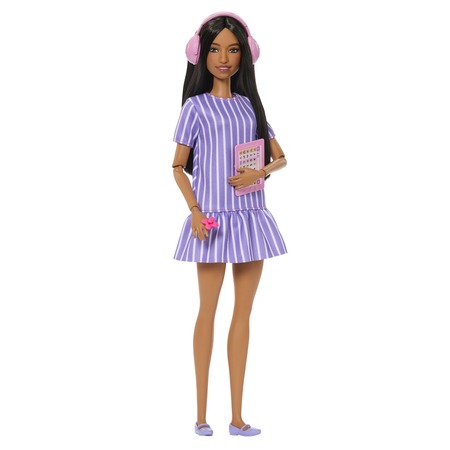
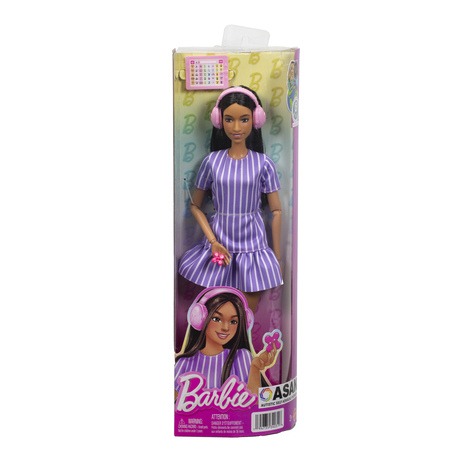
The Autistic Barbie Doll is now available in India. Developed over 18 months with guidance from the Autistic Self Advocacy Network, the doll was shaped by autistic voices, with close attention paid to how sensory experience, movement, and communication can differ from the norm.
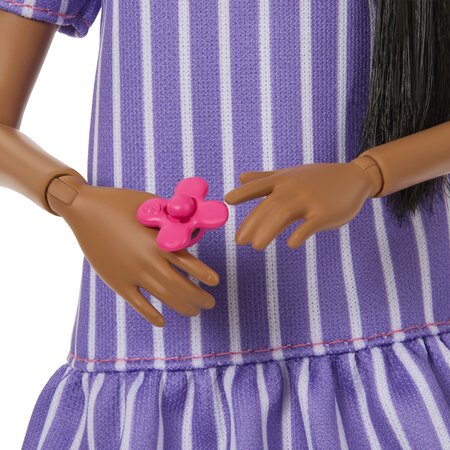
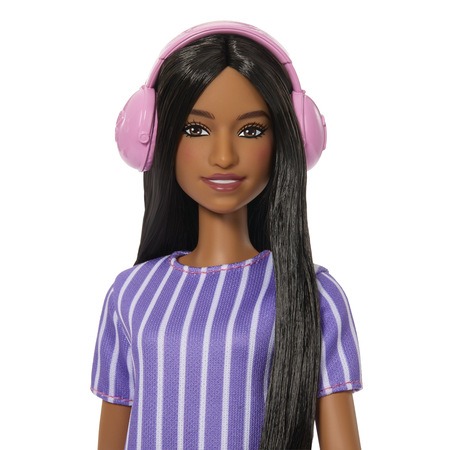
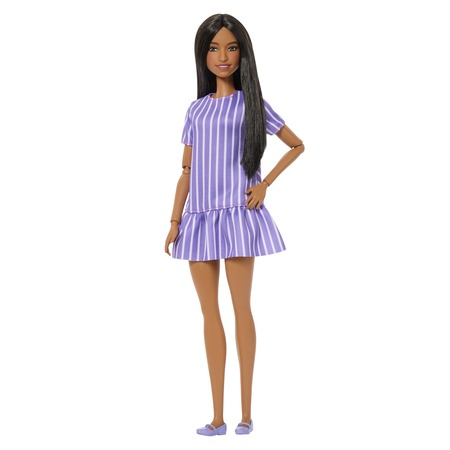
Those considerations are embedded in the design. The doll’s arms are articulated to allow for repetitive, self-regulating movements. Its gaze rests slightly off-centre. It comes with noise-cancelling headphones, a finger-clip fidget spinner, and a tablet displaying symbol-based Augmentative and Alternative Communication tools—objects that are familiar to many autistic individuals navigating daily life. The clothing is intentionally simple and loose, designed to minimise sensory discomfort, paired with flat shoes that prioritise ease over formality.
For Barbie, the doll sits within a longer evolution of representation. “Barbie has always strived to reflect the world kids see and the possibilities they imagine,” said Jamie Cygielman, Global Head of Dolls at Mattel. Designed with guidance from the Autistic Self Advocacy Network, the doll extends that philosophy into the toy aisle, offering another way for children to recognise themselves in play.
The launch also centres lived experience beyond the object itself. Barbie has partnered with advocates from the autistic community, including mother-daughter duo Precious and Mikko Mirage, autism advocate and creative entrepreneur Madison Marilla, and autistic fashion designer and visual artist Aarushi Pratap. Together, they appear in a short film documenting their reactions to seeing the Autistic Barbie Doll for the first time. The film is available on the Mattel YouTube channel.
Pratap’s involvement brings an especially grounded, Indian perspective to the project. Her work bridges neurodiversity and cultural heritage, drawing on handloom silks, plaids, and motifs such as Warli folk art. Known for a sensory-aware approach to fashion, she has shown at New York Fashion Week and designed for the Special Olympics.
“Having an autistic Barbie means people like me can see ourselves,” Pratap said. “Autism is my superpower because I think differently. My brain has different colors and expressing that makes me happy.” Diagnosed at two, she began drawing at three. And eventually turned to fashion as a way to communicate when words felt limiting. “This Barbie can help autistic people feel understood,” she added. “We can do amazing things, and I want others like me to feel proud and express themselves.”
The Autistic Barbie Doll joins the Fashionistas collection, which now spans more than 175 looks. It represents a wide range of bodies, abilities, and lived realities, including dolls with type 1 diabetes, Down syndrome, and blindness. In India, a portion of proceeds from the doll’s sales will support the India Autism Center. Which aims to extend the focus from representation into longer-term care and inclusion.
The doll is available across major retail and e-commerce platforms in India.