
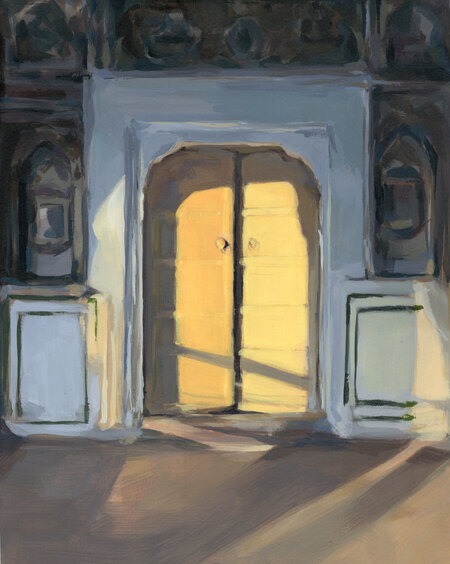
The idea of Jaipur-based artists today isn’t fixed to one medium or mood. It can look like conté portraiture steeped in mythology, oil paintings attuned to light and architecture, design-minded experimentation shaped by instinct and strategy, or the devotional discipline of Pichwai. Different practices, different rhythms; all existing in the same creative orbit. Here, we spotlight four whose work feels particularly distinct right now.
Shan Bhatnagar
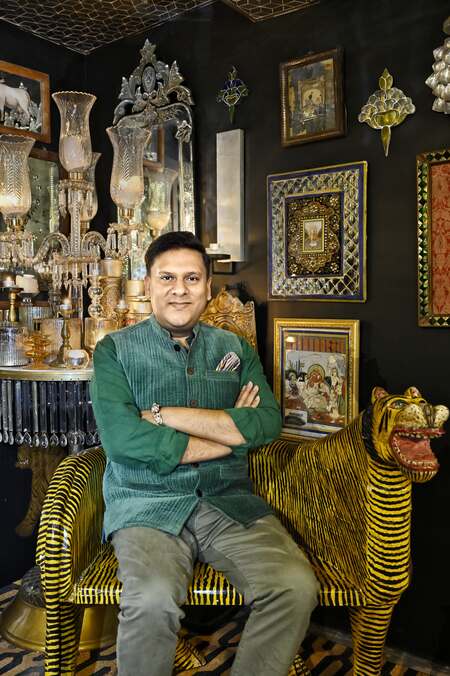
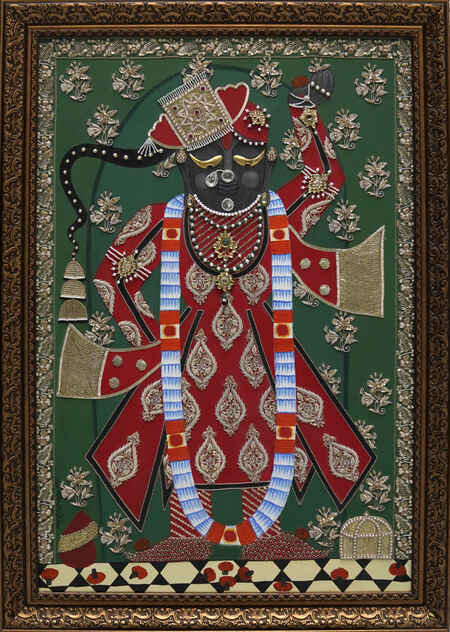
L to R: Shan Bhatnagar, Shrinathji painting
Shan Bhatnagar didn’t arrive at Pichwai through formal training. He began painting young, sketching constantly, experimenting with architecture and Rajasthan’s old facades before the work found its centre. A visit to Govind Devji Temple in 2004 shifted his direction. He came home and painted what he had just witnessed: the darshan, the colour, the atmosphere. The piece sold quickly, and from there, Krishna became a constant. Shrinathji and Govind Devji remain recurring figures in his practice, approached not as static icons but as living presences shaped by ritual, season and mood.
His canvases unfold in layered acrylic, stitched textiles and custom-made jewellery, creating surfaces that feel richly tactile and immersive. The embellishment is intentional, meant to echo the experience of standing before the deity rather than simply decorate it. When creatively stalled, he returns to Nathdwara, grounding his practice in proximity and ritual. Alongside painting, he works as an interior designer, and the two disciplines inform each other subtly, with colour, texture and devotion moving seamlessly between canvas and space. The subject may be centuries old, but the interpretation is entirely his own.
Vihangini Purohit
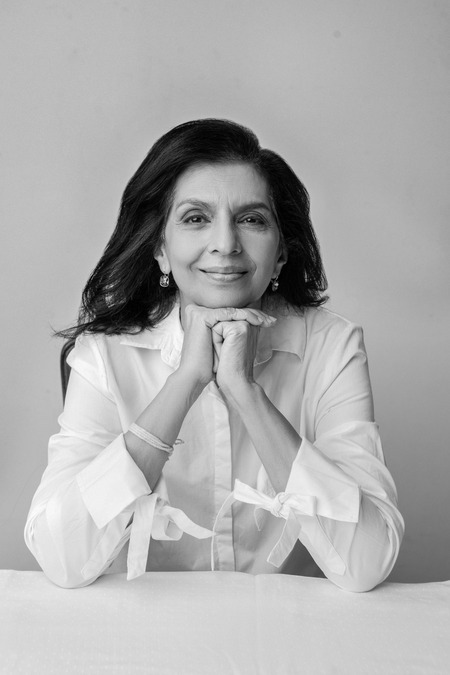
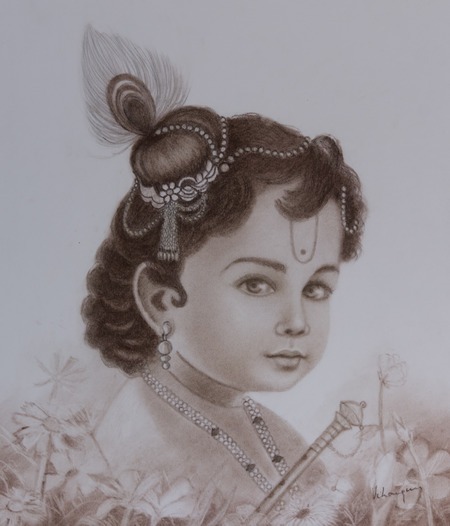
L to R: Vihangini Purohit, Krishna portrait
Vihangini grew up on stories from the Mahabharata; Krishna and Ram woven into everyday life, spoken about as naturally as family history. Her training, however, was rooted in discipline. Under the late Shantaram Badakere, known for creating portraits of Mahatma Gandhi and Jamnalal Bajaj, she learned portraiture the rigorous way: structure first, proportion always, and hours of sketching to understand bone, light and shadow before attempting expression. Today, she works primarily with conté crayons, building faces through slow layering and tonal precision. The detailing is deliberate and exact, skin softened through gradation, fabric given weight, eyes sharpened with light, resulting in portraits that carry an almost photographic presence.
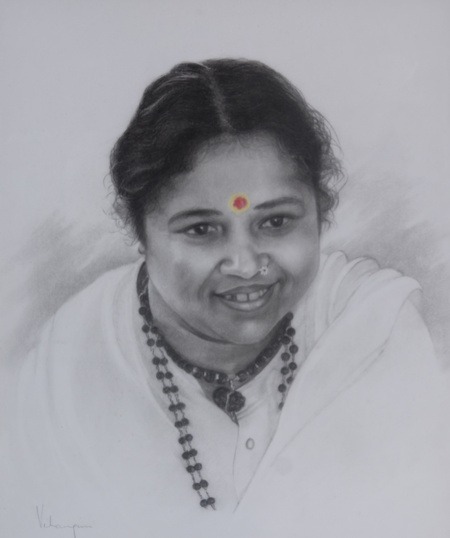
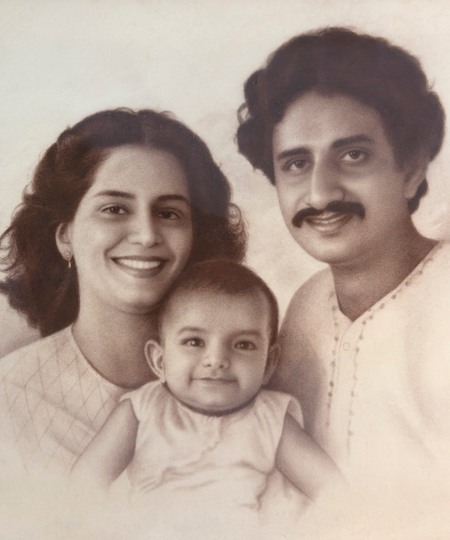
L to R: Sri Mata Amritanandamayi Devi (Amma), A family portrait
Years ago, she had a vivid dream in which Krishna appeared to her, asking her to make his portraits. The experience lingered and became a quiet but defining thread in her practice. Her Krishna portraits are now sought after for private collections, resonating with viewers for both their spiritual intensity and technical mastery. Beyond these works, she has been commissioned to create finely rendered conté portrait studies of families, distinguished judges of High Courts, and other notable personalities. Alongside her portrait practice, she also explores mythology and abstraction in acrylic on canvas, expanding her visual language while maintaining the same technical rigour and depth that anchor her work.
Neha Luthra
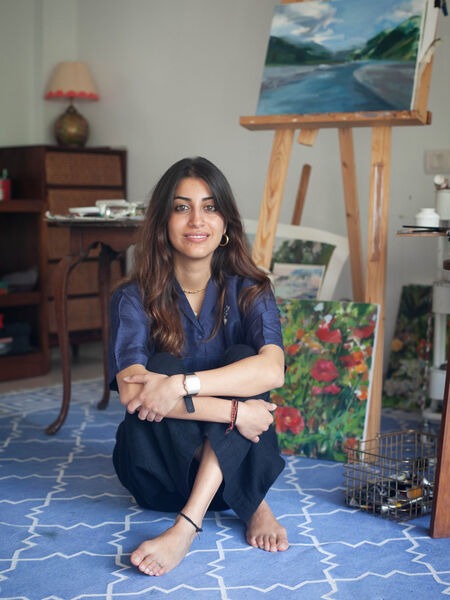
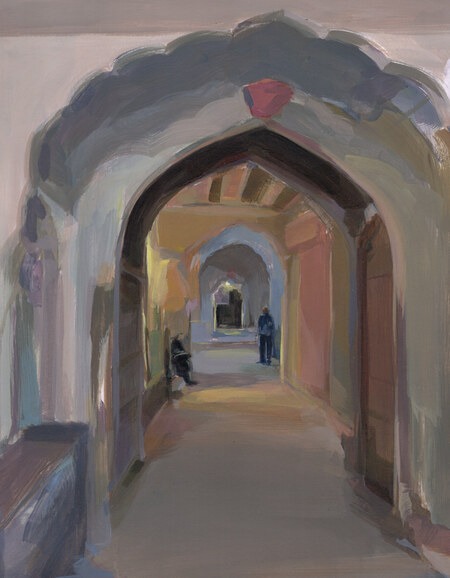
L to R: Neha Luthra, Portal
Neha Luthra’s practice carries the ease of someone shaped by many cities. Born in India and raised in Warsaw, she studied Art History and Management at the University of St Andrews before training in Surface Pattern and Textile Design at FIT in New York. Painting followed with intent, first under the mentorship of Despina Sevasti in Athens and later as part of the Royal Drawing School’s Drawing Development Year in 2023. The education is varied, but in her work it settles into something cohesive and assured.
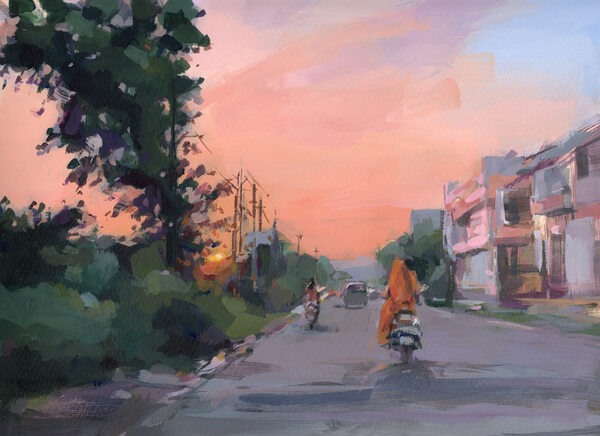
Onwards
Working primarily in oil and acrylic, Neha is drawn to colour and light as atmosphere rather than embellishment. Her paintings often begin with her own photographs and lived moments, then loosen into compositions that feel both observed and remembered. Since moving to Jaipur, her focus has turned to the city’s architecture, its shifting skies, and the quiet rhythm of daily life. The result is work that feels intimate but expansive, attentive to detail without ever feeling fixed.
Aarushi Kumar
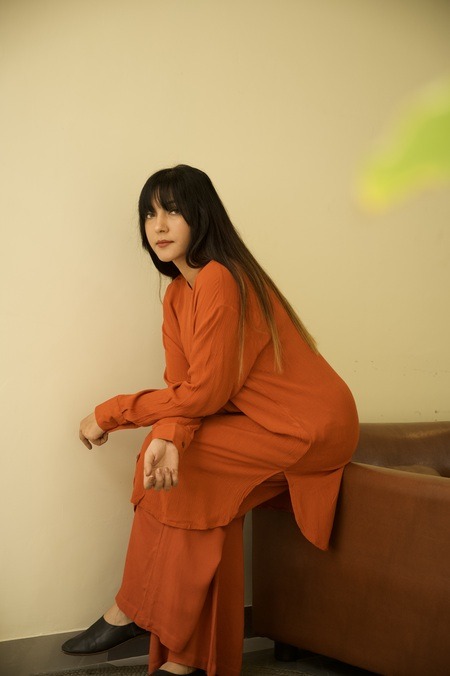
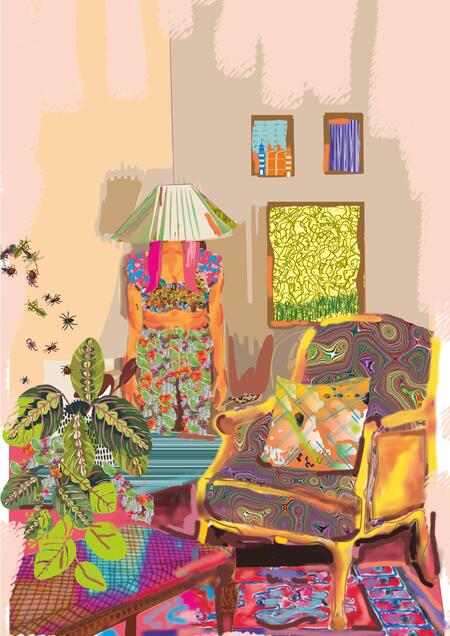
L to R: Aarushi Kumar, Lost
Aarushi Kumar is a Jaipur-based visual artist working across drawing, textile, and object design. Trained in Fine Arts and later in Art Direction at MICA, she builds her practice around detailed illustrative works that lean into surrealism while staying rooted in observation. Her compositions often begin as intricate drawings, layered with narrative and recurring characters, before extending into embroidery, furniture, lighting, and wearable pieces. The throughline is a distinct visual language where the imagined feels closely tethered to the everyday.
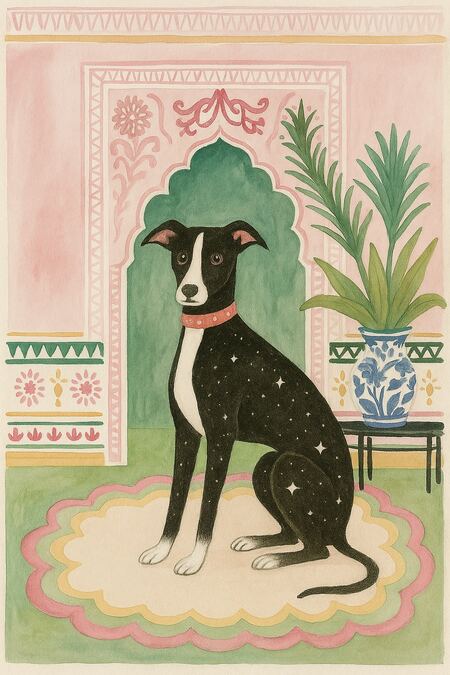
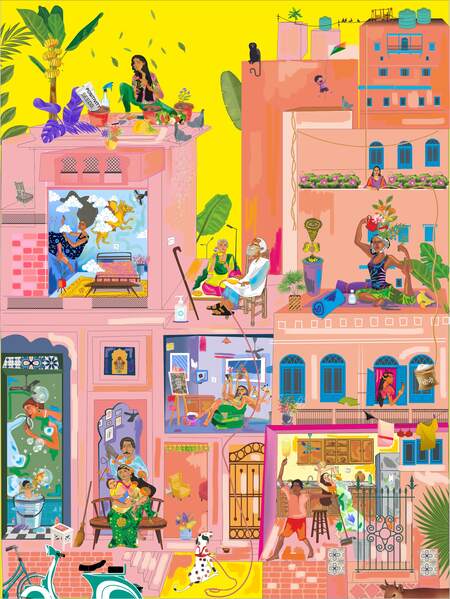
L to R: Untitled, Safe Block
Her work has moved fluidly between gallery settings and spatial collaborations, including a showcase at Jaipur’s City Palace and art direction projects for Sutra Coffee and the Taj Deccan in Hyderabad. Whether on paper, fabric, or functional objects, her practice remains cohesive, expanding her illustrated universe across mediums while maintaining clarity of form and concept.
All images courtesy: artists own. Cover image: Neha Luthra’s ‘Beyond sight’. Vihangini Purohit’s portrait: photographed by Bhanu Pratap Singh