
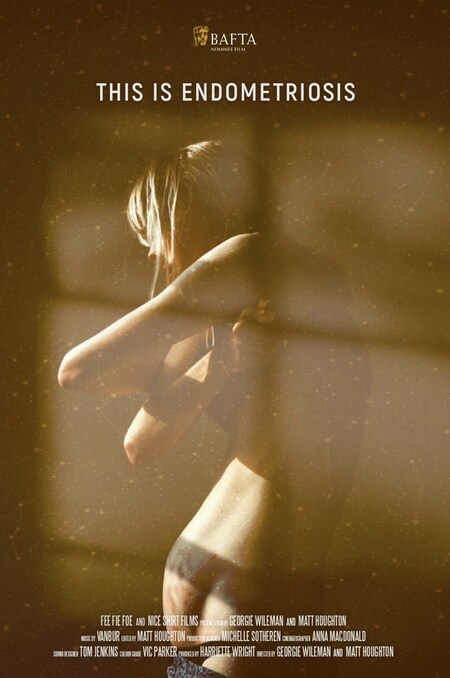
Imagine living with debilitating pain that you don’t fully understand. Imagine trying to explain it to friends, doctors and partners. Only to be met with confusion, dismissal or the classic line: “Isn’t that just a bad period?” Now imagine a film about that experience winning a BAFTA. That, honestly, is the quiet power of cinema.
This Is Endometriosis, the BAFTA-winning short film by filmmaker Georgie Wileman, does something deceptively simple: it puts a lived experience on screen that millions of people recognize instantly but rarely see reflected back at them.
Endometriosis is a chronic condition where tissue similar to the lining of the uterus grows outside it, often leading to inflammation and severe pain. It affects roughly one in ten women worldwide. That’s about 190 million people. Yet for many people living with it, the condition still exists in that frustrating space where you constantly find yourself explaining it. If you got a dollar every time you had to say, “No, it’s not just a painful period,” you’d probably be able to fund the research yourself.
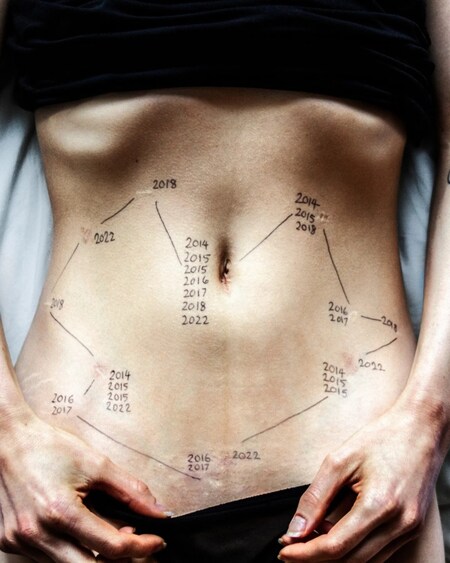
“Connect your scars. A constellation of pain.” – quote from the film
Interestingly, the project didn’t start as a film at all. It began as a photographic series, with Wileman documenting herself during flare-ups and moments of pain. At the time, she wasn’t even sure if others were experiencing the disease the way she was. That’s part of what makes Wileman’s film land the way it does. It isn’t trying to be clinical or academic. It’s personal. Wileman first became seriously ill at just 13 years old, and the film grows out of that experience. The confusion, the pain and the long road to understanding what was actually happening to her body.
“It started as a photographic series. I documented myself. At the time I didn’t know if there were people who had endometriosis like how I did,” she said in an interview with the BBC. “My experience was not what was reflected in the media and not what a lot of my doctors were saying it should be.”
The project itself took four years to make, created alongside collaborators Matt Houghton, Harriette Wright and Lauren Frankfort Meltzer. They are all volunteers who helped bring the film to life. In many ways, the production moved in sync with Wileman’s health.
“The pain and changing state of my health really dictated the film’s schedule and what it ultimately became,” she has explained. “It shows that cyclical nature of the pain. The times when you think you’re doing OK and have hope, and then it crashes back down again.” That rhythm, the hopeful stretches followed by sudden crashes — is something many people living with endometriosis immediately recognise. Because the condition isn’t just about painful periods. It’s the unpredictable fatigue, the brain fog, the endo belly, the anxiety of not knowing when the next flare-up will hit. It’s cancelling plans. It’s reorganising your life around your body.
What This Is Endometriosis manages to do is capture that experience without turning it into a lecture. Instead, it feels like someone finally saying the quiet parts out loud.
The film also touches on something that often goes unspoken: the emotional toll of navigating the medical system while living with chronic pain. Wileman has spoken openly about developing complex PTSD as a result of difficult medical experiences, and about how misinformation about endometriosis is still surprisingly common even in clinical settings.
A BAFTA win means the conversation gets bigger. It means more people hear the word endometriosis and maybe, understand it a little better. Because for the 190 million people living with the condition, being seen and believed is often half the battle. And sometimes, all it takes to start that shift is a film.
All images: This is Enodmetriosis