
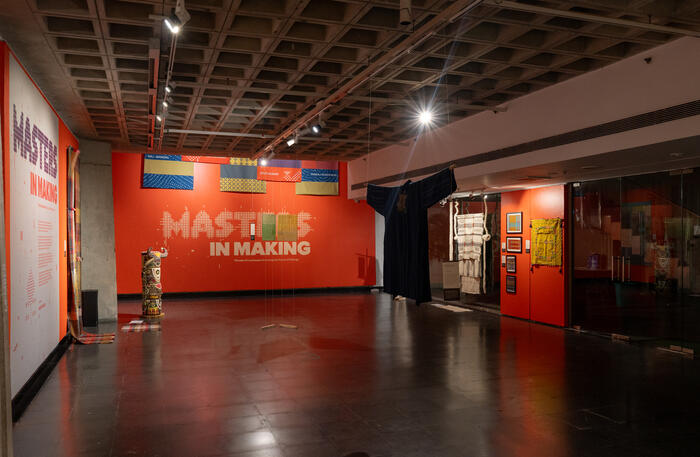
Indian textiles have been doing their thing for centuries. Long before fashion started obsessing over craftsmanship, slow production and artisanal everything, generations of Indian makers had already mastered the art of working with thread. And while fashion continues to borrow from these traditions, a group of artists in Delhi decided to take the conversation somewhere else entirely: the art gallery.
Enter Threads of Continuum: Reweaving the Future of Heritage, an exhibition that took over Alliance Française de Delhi from October 1–10. Curated by Anjchita B. Nair, the show brought together 20 artists, artisans and craft collectives working with everything from rare weaving techniques to hand embroidery and block printing.
Presented by Burgoyne Original Masters as the culmination of its inaugural Masters in Making initiative, the exhibition brought together artists working across traditional craftsmanship and contemporary art, each with their own perspective on where these practices are headed.
The Craft Is the Art
Forget the usual conversation around heritage textiles. Some of the techniques featured here have been around longer than most things in your wardrobe could ever dream of.
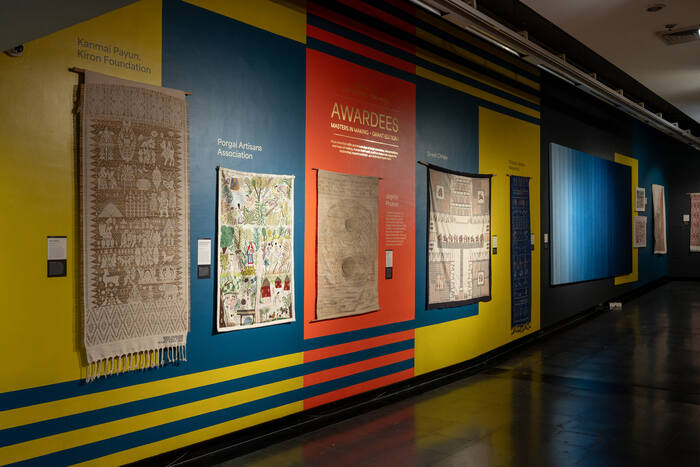
Dhaiyda Jitendra works with Tangaliya weaving, a nearly 700-year-old technique from Kutch, bringing Kala cotton and tussar silk into the mix. Meanwhile, Rajasthan’s Dinesh Chhipa, a fifth-generation Bagru printer, is keeping the traditional 16-step printing process in play, including the increasingly rare Fadat technique.
Over in Assam, Kanmai Payun, a master weaver from the Mishing community in Majuli, works with intricate earth-loom techniques that are becoming harder to come by. Different regions. Different materials. An impressive amount of skill.
Meet the Makers Keeping Things Interesting
One of the standout names was Porgai Artisans Association, an 80-woman collective from Tamil Nadu’s Sittilingi Valley working with Lambadi embroidery.
The technique was revived from near-extinction in 2006, and for the women behind Porgai, every stitch is also tied to livelihood and cultural identity. Pretty significant for something the fashion world might otherwise label a decorative detail.
Then there’s Jagrity Phukan, whose work follows Assam’s Muga, Eri and Mulberry silk traditions all the way from the soil to the finished cloth, putting the people and places behind the fabric into the picture.
So Where Does Craft Go From Here?
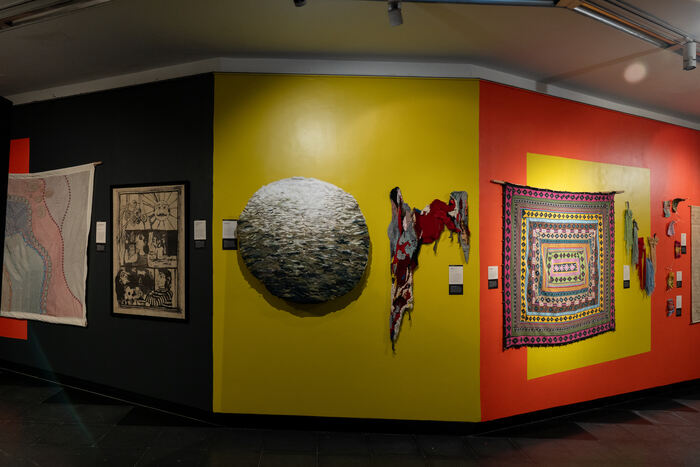
Beyond the installations, the exhibition made room for conversations about the future of textile-making, alongside a patchwork workshop by artist Kamala Murali that turned fabric scraps into something entirely new.
Five grant recipients emerged from a lineup of 20 participants, selected following an open call that attracted over 180 applications nationwide. The interesting part isn’t simply that these techniques have survived for generations. It’s what today’s makers are choosing to do with them.